

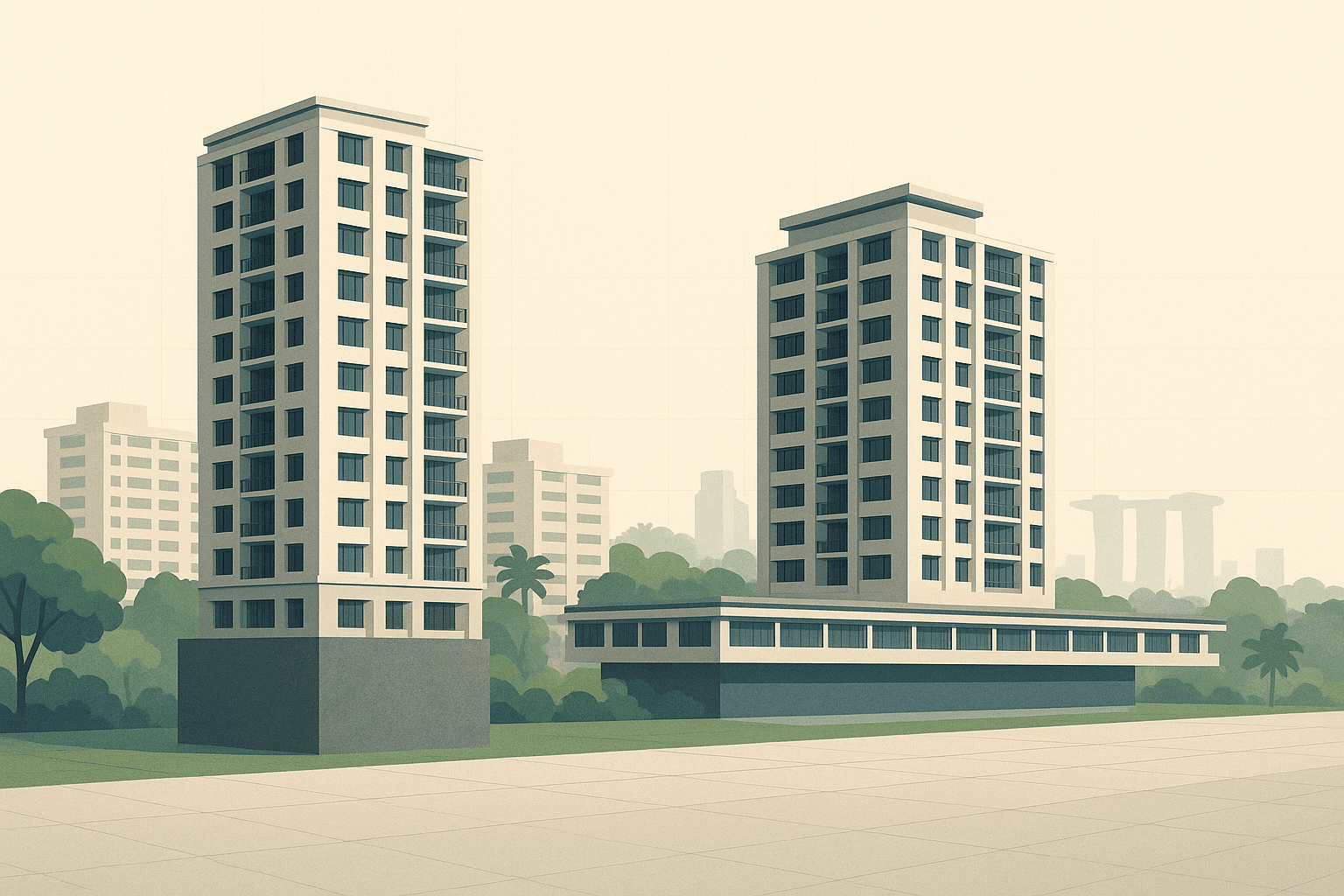
Purchasing a residential property in Singapore involves several important considerations, including location, purchase price, apartment design, accessibility, and ownership tenure. While many buyers initially focus on the appearance and facilities of a condominium, understanding the property’s tenure is equally important, particularly for those planning long-term ownership or considering future resale opportunities.
Singapore’s residential property market includes freehold, 999-year leasehold, and 99-year leasehold developments. Each ownership structure has different characteristics that can influence purchasing decisions, financing considerations, and long-term property planning.
Two developments that provide an interesting comparison are One Chuan Grove and River Opus. Their different leasehold arrangements offer an opportunity to understand why tenure should be considered carefully before purchasing a private residential property.
What Does Property Tenure Mean?
Property tenure refers to the legal period during which an owner holds an interest in a property.
In Singapore, private residential developments commonly have either freehold or leasehold ownership structures.
A freehold property generally provides ownership without a fixed lease expiry date, subject to applicable laws and regulations.
A leasehold property provides ownership rights for a specified period. Once the lease expires, the property generally reverts to the landowner, subject to the relevant legal arrangements.
Among leasehold properties, 99-year and 999-year tenures are particularly important categories for buyers to understand.
Although both offer long periods of ownership, the difference between them can influence how purchasers evaluate a property’s long-term suitability.
Understanding 99-Year Leasehold Properties
A 99-year leasehold property provides ownership rights for a period of 99 years.
Many private condominiums in Singapore are developed on 99-year leasehold land. These properties can appeal to homeowners and investors seeking residential opportunities in established neighbourhoods.
However, the lease period gradually decreases over time.
For example, a newly completed development with a 99-year lease will have a shorter remaining lease after several decades of ownership.
This is important because remaining lease duration can influence buyer preferences, financing considerations, and future resale opportunities.
A property with a substantial remaining lease may appeal to a wider range of buyers than an otherwise similar property with a significantly shorter remaining lease.
Nevertheless, the actual attractiveness of a property depends on several factors, including location, purchase price, apartment specifications, market conditions, and the buyer’s intended holding period.
One Chuan Grove: A 99-Year Leasehold Residential Development
One Chuan Grove is located along Chuan Grove in District 19, within the Lorong Chuan and Serangoon neighbourhood.
The development is planned to comprise approximately 1,056 residential units across five residential blocks.
Its location provides access to established neighbourhood amenities, shopping destinations, and public transportation.
One of its notable location advantages is proximity to Lorong Chuan MRT Station on the Circle Line.
Residents can also access shopping facilities such as NEX and Junction 8, together with educational institutions and recreational destinations in the wider area.
The development’s 99-year leasehold tenure is an important consideration for prospective purchasers.
Buyers should evaluate how the lease duration relates to their personal ownership plans.
For example, a homeowner planning to occupy the property for a few decades may have different priorities from an investor seeking a long-term asset for future resale.
It is also important to examine the property’s purchase price relative to comparable developments in the neighbourhood.
A 99-year leasehold property should not automatically be considered less attractive than a longer-lease property. Its location, affordability, facilities, and residential suitability can all contribute to its overall appeal.
Understanding 999-Year Leasehold Properties
A 999-year leasehold property provides ownership rights for a considerably longer period than a conventional 99-year leasehold property.
Although it remains technically leasehold rather than freehold, its exceptionally long tenure can make it comparable to freehold ownership for many practical residential planning purposes.
For purchasers who intend to hold a property over an extended period, the remaining lease duration may be an important consideration.
A 999-year tenure also provides a different resale proposition compared with a property that has a much shorter lease period.
However, buyers should not assume that a longer tenure automatically guarantees better investment performance.
The property’s purchase price, location, surrounding infrastructure, development quality, and market demand remain important factors.
River Opus: A 999-Year Leasehold Residential Proposition
River Opus is located at 491 River Valley Road in District 10.
The development is associated with the redevelopment of the existing Valley Point site and is planned as a mixed-use project comprising private residences, serviced residences, and commercial components.
One of its distinguishing characteristics is its 999-year leasehold tenure.
The development’s central River Valley location provides access to the Singapore River, Robertson Quay, and Great World.
These destinations offer shopping, dining, and lifestyle opportunities that may appeal to buyers who prefer an established central residential neighbourhood.
Transportation accessibility is another consideration.
Great World and Havelock MRT stations on the Thomson-East Coast Line serve the surrounding area.
For prospective homeowners, the combination of a central residential address, established amenities, and a long lease tenure may make River Opus an interesting property to investigate.
Nevertheless, buyers should assess its purchase price and apartment specifications carefully rather than relying on tenure alone.
Comparing 99-Year and 999-Year Leasehold Properties
The difference between these two ownership structures is primarily the duration of the lease.
A 99-year leasehold property has a finite ownership period that becomes shorter over time.
A 999-year leasehold property offers a substantially longer period, reducing the practical significance of lease expiry for many purchasers.
However, both remain subject to their respective legal ownership arrangements.
| Consideration | 99-year leasehold | 999-year leasehold |
| Ownership period | 99 years | 999 years |
| Remaining lease | Reduces over time | Reduces over time |
| Long-term planning | Important to assess lease balance | Generally offers a much longer horizon |
| Resale considerations | Remaining lease can be significant | Purchase price and location remain important |
| Investment suitability | Depends on individual circumstances | Depends on individual circumstances |
The comparison illustrates why buyers should understand tenure as part of a wider purchasing assessment.
How Tenure Can Influence Property Financing
Property tenure can also affect financing considerations.
Financial institutions may examine the remaining lease when assessing mortgage applications.
The amount that a purchaser can borrow may depend on applicable lending rules, the property’s remaining lease, the borrower’s age, and other financial circumstances.
Buyers should consult banks or mortgage professionals to understand the financing implications before making a purchase.
This is particularly important for properties that have already experienced substantial lease decay.
It is equally important to evaluate the financial implications of holding a property over an extended period.
Which Tenure Is More Suitable for Homebuyers?
There is no universal answer because different buyers have different requirements.
A homeowner prioritising neighbourhood convenience, apartment configuration, and affordability may find a 99-year leasehold development suitable.
Another buyer who places greater emphasis on a very long ownership horizon may prefer exploring a 999-year leasehold property.
The decision should also account for the intended holding period.
Buyers purchasing a home for personal occupation may prioritise immediate residential comfort and location.
Investors may focus more heavily on acquisition price, potential rental income, resale conditions, and overall financial returns.
Neither tenure should be treated as a guarantee of capital appreciation.
Conclusion
Understanding property tenure is essential when purchasing residential real estate in Singapore. The difference between 99-year and 999-year leasehold properties can influence ownership planning, financing considerations, and future resale decisions.
One Chuan Grove offers a 99-year leasehold residential opportunity within the established Lorong Chuan and Serangoon neighbourhood.
River Opus provides a contrasting proposition through its 999-year leasehold tenure and central River Valley location.
Both developments demonstrate how tenure and location can contribute differently to a property’s overall appeal.
Ultimately, prospective buyers should evaluate ownership tenure alongside purchase price, apartment specifications, neighbourhood amenities, financing requirements, and long-term objectives.
A well-informed purchasing decision requires understanding the complete property proposition rather than focusing on a single feature.